Fast first aid and CPR training can feel complicated in the beginning glimpse. Carriers make use of phrases like "express first aid course", "fast CPR refresher course" or "child care first aid degree C", typically without plainly discussing what each one really covers.
If you just look at the timetable and rate, you run the risk of going out with the incorrect first aid certificate for your job, your sector, or the genuine emergencies you are likely to face. I have seen individuals complete a short CPR course thinking they were workplace compliant, only to uncover they still needed a full first aid course before they can begin a new role.
This guide disentangles the main course levels, discusses what "fast" or "express" actually implies, and helps you pick a first aid and CPR course that suits your goals and schedule, without cutting edges on safety.
Why speed matters, however material issues more
Fast first aid courses and express CPR training exist for an excellent reason. People are active, certifications run out, and employers commonly provide short notice prior to a begin date or an audit. I consistently see:
Managers getting in touch with a Thursday mid-day, needing 3 staff via first aid and CPR training classes before Monday.
Parents booking an express child care first aid course since their childcare position begins following week. Health and wellness specialists pressing a fast CPR correspondence course right into a lunch break.In those situations, a fast first aid course or fast cpr alternative can be a lifesaver for your timetable. The secret is making sure the shorter timetable does not remove out critical skills.
A great express first aid training carrier shortens downtime, not the knowing. They restructure, mix online and class job, and enhance assessment. They do not miss crucial first aid skills like bleeding control, use an AED, or taking care of a subconscious casualty.
When you compare fast first aid courses, look past the word "fast" and ask: what degree is it, and what does that degree really mean?
How first aid and CPR course degrees are normally structured
Different countries and companies utilize somewhat various labels, however the structure tends to follow the exact same logic. There is a ladder of intricacy:
Basic life support and CPR at the bottom, then broad workplace first aid, adhered to by more advanced or specific training such as child care or remote area first aid.
At a high degree:
CPR only
General first aid (frequently called "Offer First Aid", "Criterion First Aid", or comparable) Advanced or work very first aid Specialized streams, such as childcare first aid or sports initial aidFast first aid training can happen at any of these degrees. A 2 hour express cpr course, a someday fast first aid course, or a compressed advanced program spread out throughout a few nights are all feasible. What matters is the web content that rests beneath the label.
CPR courses versus full first aid training
One of the most common factors of confusion is the difference between CPR courses and a full first aid and cpr course.
CPR training concentrates on heart attack, unresponsiveness, and use an AED. first aid course in Adelaide You learn how to:
Recognize cardiac arrest, call for assistance, and begin upper body compressions
Offer rescue breaths if needed for your guideline or workplaceUse a computerized outside defibrillator confidently Handle an unconscious breathing person in the recovery position
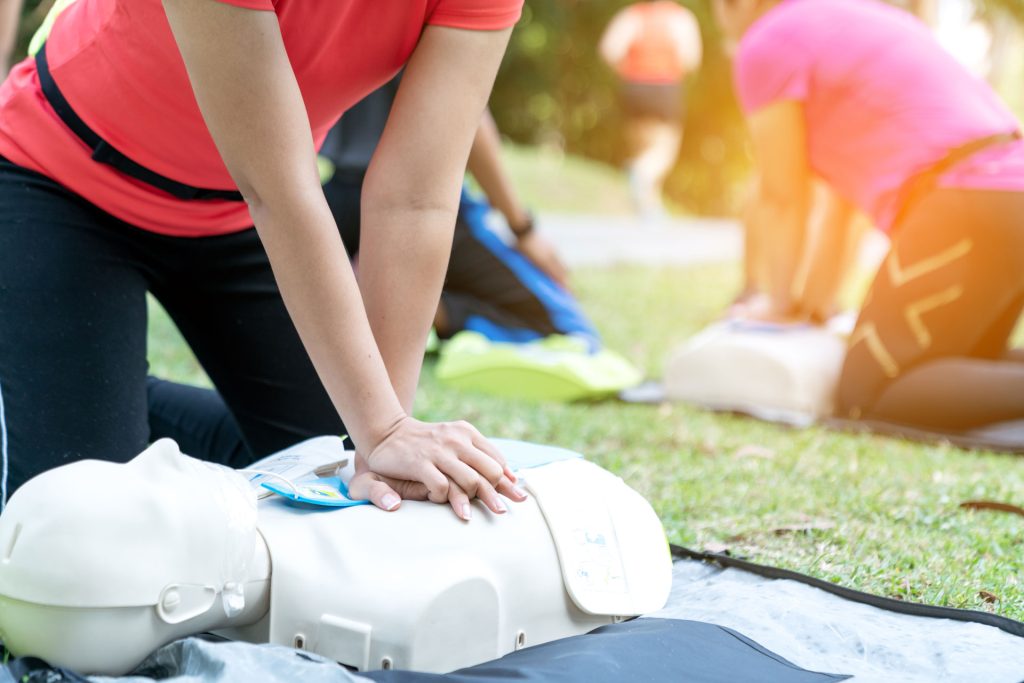
A fast cpr course can properly be short, often around 1 to 2 hours in the class, particularly when combined with pre‑course online concept. This works well because high‑quality CPR training is deliberately repeated and hands‑on. You spend most of the time on manikins practicing compressions and cycles of breaths.
In comparison, a full first aid course or incorporated first aid and cpr courses prolong far past cardiac arrest. An extensive first aid and cpr training course should cover topics such as:
Severe blood loss, shock, and injury care
Typical medical emergency situations like bronchial asthma, anaphylaxis, seizures, and diabetic emergencies Fractures, sprains, and soft cells injuries Ecological concerns like warmth fatigue or hypothermia, depending on your region Basic first aid for eye injuries, burns, and minor woundsIf a course is marketed as a fast first aid course yet is just 2 hours long, it is likely CPR just or a really slim ability. For a lot of offices and professional roles, you will certainly need a full first aid certificate that includes CPR, not simply stand‑alone CPR courses.
Quick recommendation: typical course names and what they generally mean
This is among the two lists.
- CPR training, fast cpr, or express cpr course: Concentrated on heart attack, compressions, rescue breaths, and AED usage. Frequently 1 to 3 hours, in some cases combined with on-line theory. First help and CPR course, basic first aid, or basic first aid training: More comprehensive emergencies, consisting of CPR. Typically a complete day personally, or shorter with pre‑course e‑learning. Express first aid or fast first aid courses: Very same web content as the basic degree, yet delivered with online pre‑study or compressed schedules. Express childcare first aid course: Concentrated on infants and children, allergic reactions, bronchial asthma, and childcare environments. Typically required in education and learning and very early childhood roles. Advanced or work first aid (often called fap first aid or comparable local tags): Deeper evaluation skills, oxygen, multiple casualty monitoring. Longer total, even if some parts are fast‑tracked.
Different companies utilize a little various names, so always review the course summary, not just the title.
What "fast" and "express" actually imply in practice
From the instructor side of the area, a fast first aid course does not suggest less material. It generally indicates:
More work before you arrive. You full theory online, view video clips, or work through interactive components at your own speed. In‑person time is reserved for concerns, situations, and assessments.
Faster transitions and tighter breaks. There is much less downtime between tasks and presentations. You might run scenarios back‑to‑back. Presumed proficiency and computer comfort. If you are not comfortable with e‑learning, a fast first aid training format may really feel hurried or stressful. Restricted room for off‑topic discussion. In a traditional course there is most of the time for long anecdotal tales. In a compressed schedule we concentrate on core skills and the inquiries that matter for competence.This style functions quite possibly for individuals who:
Are restoring a first aid certificate and currently have real‑world experience
Usage first aid and CPR abilities at the office and desire an efficient refresher Discover efficiently from on the internet modules and are self‑disciplined sufficient to finish pre‑course work properlyIt is much less ideal for individuals who are:
Completely new first aid courses Adelaide to very first aid
Distressed about emergency situation situations Not confident with technology or analysis thick material onlineWhen a student that has never done first aid shows up for an express first aid course without completing the e‑learning, they normally have a hard time. I have had to reschedule more than one participant that can not demonstrate the called for understanding during assessment since they presumed the "fast" alternative would be easier, not just shorter.
Understanding express first aid and childcare‑specific courses
Specialized programs like express childcare first aid training incorporate basic first aid with pediatric‑specific understanding. A strong express child care first aid course ought to consist of:
Recognition of major illness in babies and kids, such as sepsis red flags
Paediatric CPR variants, consisting of compression depth and ratios Choking administration for children and toddlers Bronchial asthma and anaphylaxis administration customized to very early understanding settings Practical scenarios that match genuine childcare situations, such as play ground injuries or allergies throughout meals 
Many regulators need childcare workers and early childhood educators to hold a certain degree of first aid and cpr certificate that specifies to children. An express child care first aid course can fulfill those needs, gave it is aligned with your neighborhood standards.
Express childcare first aid courses can be intense. You cover a great deal of material in a condensed home window, often with extra focus on interaction with moms and dads and emergency situation solutions. If you are new to collaborating with kids, you might choose a standard‑length course initially, then switch to express child care first aid refresher training for renewals.
Blended knowing and fast certification
Fast certification is normally made possible with blended understanding. That indicates component of the first aid training takes place online, and component takes place in person.
From a top quality point of view, mixed first aid and CPR courses can function effectively when:
The online modules are interactive, not just a long PDF.
You can stop and return to, so you can spread out the understanding throughout a few evenings. The in‑person session is clearly focused on hands‑on practice and assessment of important skills. You still have enough time face‑to‑face to ask inquiries and repeat skills until they feel natural.Fast first aid courses supplied completely online are a different story. Simply on-line first aid training might provide you a certificate, but it does not let a trainer fix your hand placement throughout compressions or examine that you can roll a subconscious individual safely into the recuperation position. Many markets and regulatory authorities do not accept fully online first aid training for exactly this reason.
If you see an express first aid course that claims you can complete every little thing online with no practical element, be cautious. Ask your employer or licensing body whether that type of first aid certificate is acceptable. Oftentimes it is not.
Finding a fast first aid course near you that still meets standards
Searching for a "fast first aid course near me" will offer you a lot of alternatives, however not all brief courses are equal. When you contrast suppliers, look at numerous details instead of just picking the very first ad.
First, recognize the degree you actually need. Is your employer requesting for a general first aid certificate, a consolidated first aid and CPR course, or something industry specific like express childcare first aid? Matching the degree properly matters more than shaving thirty minutes off the timetable.
Second, inspect the supplier's acknowledgment in your region. Are they recognized or formally recognized by the pertinent wellness or training authority? Do major employers, institutions, or community organizations in your location utilize their first aid and cpr courses?
Third, reviewed the moment break down. A legitimate fast cpr correspondence course might list 2 hours on-line plus 1 hour in person. A full fast first aid training day may reveal 4 to 5 hours in the class, plus pre‑course e‑learning. If a company markets "full first aid and CPR course in 60 minutes without any method", that is a red flag.
Finally, look at renewal and assistance. Some organizations send out tips when your first aid certificate is about to run out, or deal discounted fast cpr courses for returning students. That can make revivals much much less stressful.
What to anticipate in a fast first aid and CPR class
The rhythm of an express first aid course really feels somewhat different from a conventional one, although the core activities are similar.
You typically arrive having actually already completed theory components online. The fitness instructor will briefly evaluate crucial principles, clarify any kind of complicated parts from the e‑learning, and after that relocate swiftly into demonstrations and method. You could cycle via:
CPR terminals for adults, youngsters, and infants
AED usage on various training devices Situations that include two or three substitute individuals with various priorities Hemorrhaging control drills with bandages and tourniquets, if consisted of in your syllabus Substitute bronchial asthma or anaphylaxis occasions, commonly using instructor auto‑injectorsBecause time is limited, there is more emphasis on operating in pairs or tiny groups to keep every person energetic. You should expect to spend a significant section of the session on your feet, doing abilities, not sitting in a chair paying attention to slides.
Assessment in a fast first aid course is commonly continuous. Instead of a long exam at the end, the fitness instructor checks your abilities during each situation or activity. That decreases stress but just works if you stay engaged from the start.
Wear comfortable clothes, bring water, and do the online theory appropriately. Skimming or skipping the pre‑course job is the solitary biggest factor people fall behind or really feel overloaded in an express first aid training session.
How long are certifications legitimate, and when to use fast refreshers
Most nations require first aid certifications to be restored every 2 to 3 years, and CPR more regularly, often every year. Exact time frames vary, however a typical pattern is:
First help and CPR combined certificate: valid for 3 years, with recommendation to revitalize CPR skills every 12 months.
Standalone CPR courses: valid for year.Fast cpr correspondence course and express first aid refresher training are created for these revivals. They presume you have already found out the web content in depth a minimum of as soon as. Throughout refreshers, instructors can focus on:
Updates to standards, such as adjustments in advised compression deepness or sequence
Locations where real‑world occurrences reveal people commonly hesitate, like starting compressions on older individuals or making use of an AED in public Restoring muscle memory so your hands go automatically to the correct placement on the chestIf it has actually been many years since you last attended any type of first aid training, or if you have never made use of the skills in technique, you may benefit more from a full‑length course rather than an express refresher. A fast certification approach functions best as maintenance, not first learning.
A simple checklist for picking a fast first aid or CPR course
This is the 2nd and last list.

- Confirm the level you require: CPR only, complete first aid and cpr, childcare first aid, or advanced/fap first aid. Check acknowledgment: is the carrier accepted by your company, regulatory authority, or industry? Read the layout: is it blended (online concept plus class) or online? Exists sufficient hands‑on method time? Match the rate to your experience: select express first aid courses if you are positive and renewing, standard courses if you are new or nervous. Look at renewal options: will you have access to future fast cpr courses or express first aid refresher alternatives to maintain your certificate current?
Keep that checklist convenient when you contrast fast first aid courses side by side.
The trade‑off in between "brief" and "too short"
As a person that has actually viewed lots of classes from the front of the area, I have a clear sense of when a timetable crosses from "efficient" right into "harmful". A fast first aid course can work extremely well when it presses idle time, depends on solid pre‑course learning, and keeps class sizes affordable so every individual has actually hands‑on practice.
It quits working when:
Class dimensions are so big that individuals hardly touch the manikins.
The timetable leaves no time for repeating, concerns, or consolidation. Instructors feel forced to hurry previous scenarios to keep to the clock. Learners use "fast" as a justification to miss the on the internet components and wish for a faster way on assessment.First aid and CPR training are not simply boxes to tick for conformity. When a person falls down in front of you, there is no time at all to look up a video clip. The quality of your first aid course, fast or not, directly influences how positive and crucial you will certainly remain in that moment.
If you are struggling to pick between a 3 hour express first aid course and a 5 hour version that plainly consists of more method, ask yourself which one you would want your associate to have taken if they were the person starting CPR on you.
Bringing it together
Fast first aid, express cpr courses, mixed first aid training and childcare‑specific programs all exist to make life much easier without lowering capability. They allow busy people preserve capability, satisfy workplace requirements, and feel prepared to act, despite tight schedules.
The most safe technique is to be deliberate. Decide what degree of first aid and cpr course you need, select a credible company, and then determine whether a fast or basic timetable fits your discovering style. Usage fast certification as a device, not a faster way. When you do that, a well‑designed express first aid course comes to be exactly what it must be: a focused, reliable course to real‑world readiness.